A Comprehensive Guide to Cooling And Heating Jobs: Skills, Training, and Work Potential customers
The heating and cooling market is a vibrant area that needs an one-of-a-kind set of skills and training. Professionals must possess strong communication and problem-solving abilities while paying attention to detail. Professional training and certifications are necessary for those aiming to enter this market. As need for energy-efficient modern technologies grows, so do work leads. Comprehending the demands and pathways can open up varied opportunities within this industry. What are the vital aspects that can influence job innovation?
Important Skills for Cooling And Heating Professionals
Although technical expertise is vital, cooling and heating specialists need to also possess a varied set of important abilities to succeed in their field. Communication skills are extremely important, as specialists usually connect with clients to describe intricate issues and options in understandable terms. Analytical capabilities are just as important; specialists need to settle and diagnose a/c system malfunctions effectively.

Furthermore, solid attention to detail guarantees that repairs and installations are finished precisely, decreasing possible concerns. Physical stamina and mastery are needed, given the needs of the work, including raising heavy devices and functioning in constrained areas.
Time monitoring skills permit heating and cooling service technicians to prioritize jobs effectively, ensuring prompt solution shipment. Flexibility is essential in a swiftly advancing market where new modern technologies and techniques arise frequently. Jointly, these skills enhance a HVAC specialist's efficiency, assuring they meet customer requirements while maintaining high requirements of service.
Training and Accreditation Requirements
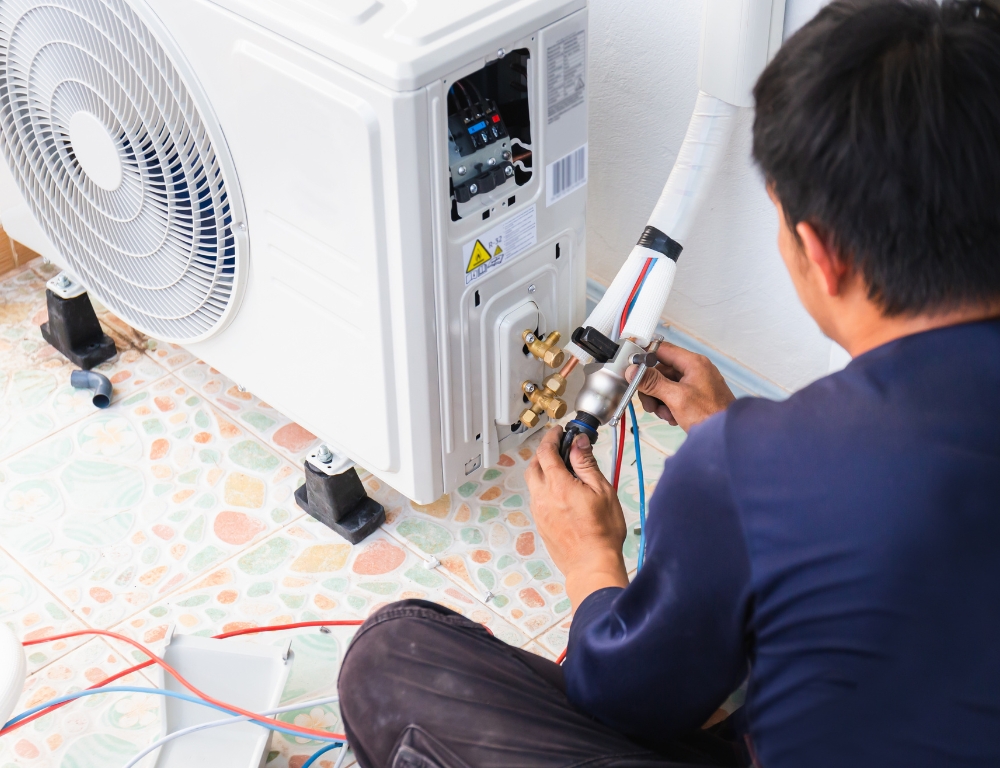
To excel in the cooling and heating market, individuals should undertake certain training and obtain relevant qualifications that verify their skills and knowledge. Commonly, aspiring a/c specialists begin with a senior high school diploma or equivalent, followed by occupation training or an associate degree in heating and cooling modern technology. These programs typically cover essential principles, system style, and fixing strategies.
Along with official education and learning, obtaining qualifications from identified companies, such as the Environmental Defense Agency (EPA) and North American Service Technician Quality (NATE), is necessary. EPA accreditation is required for managing refrigerants, while NATE accreditation shows efficiency in different cooling and heating topics.
Hands-on experience via internships or instructions better improves an individual's qualifications. Constant education is also essential, as the cooling and heating industry evolves with new innovations and policies. By fulfilling these training and certification requirements, people position themselves for success in an affordable task market.
Profession Paths in the Cooling And Heating Market
With the required training and certifications in area, individuals can explore various profession paths within the a/c industry. Common duties include a/c technician, that does repair services, installation, and maintenance of heating, ventilation, and cooling systems. Another choice is becoming a cooling and heating designer, concentrating on system design and performance, frequently needing advanced education and learning in design principles.
Additionally, people may go after get more sales functions, specializing in cooling and heating services and products, which require solid interaction skills and technological understanding. Some may select to advance into management settings, looking after teams and jobs while ensuring compliance with sector standards. Furthermore, chances exist in power bookkeeping, where additional info experts examine power use in structures and suggest renovations. Each path uses unique difficulties and incentives, providing to diverse skill sets and interests within the cooling and heating area.
Work Prospects and Work Opportunities
The HVAC sector flaunts a strong demand for certified specialists, driven by the continuous need for climate control systems in residential, business, and industrial settings. As power efficiency and ecological sustainability become progressively important, the demand for experienced service technicians proceeds to climb. Work leads are specifically beneficial for those with specialized training and certifications, as companies look for individuals with the current knowledge in energy-efficient modern technologies and smart cooling and heating systems.
According to market records, the work of heating and cooling service technicians is forecasted to expand considerably over the next decade, showing the market's durability even throughout financial fluctuations. Additionally, as older systems call for substitute and new buildings emerge, possibilities include both skilled specialists and newbies. Numerous cooling and heating companies are likewise broadening their services, creating more openings (HVACJobsOnly). In general, people going into the HVAC area can anticipate a durable task market, with sufficient opportunities for development and stability
Tips for Progressing Your HVAC Job
As specialists browse their heating and cooling careers, seeking continuous education and learning and specialized training can greatly boost their innovation prospects. Taking part in certification programs, such as those supplied by North American Technician Quality (NATE) or the Refrigeration Solution Engineers Society (RSES), can substantially improve a service technician's integrity and knowledge base. Networking within the industry is equally essential; attending exhibition, workshops, and local sector events can open doors our website to brand-new opportunities and partnerships.
In addition, getting experience in diverse areas, such as industrial systems or energy performance technologies, permits professionals to become versatile specialists - HVAC Jobs Only website. Developing soft abilities, consisting of interaction and problem-solving capabilities, is essential for those going for supervisory or monitoring duties. Staying notified regarding industry fads and emerging modern technologies guarantees that Cooling and heating specialists stay competitive in a rapidly progressing area, placing them for long-lasting profession success.
Regularly Asked Questions
What Is the Average Wage for HVAC Technicians?
The ordinary income for cooling and heating specialists varies by place and experience but typically ranges in between $40,000 and $60,000 each year. Factors such as certifications and specialization can substantially influence earning possible in this area.
Are There Specialized A/c Area to Take Into Consideration?
Yes, there are specialized heating and cooling fields, consisting of residential, commercial, and industrial a/c, in addition to areas like refrigeration, energy monitoring, and interior air top quality. Each expertise offers distinct skills and career opportunities within the industry.
How Can I Find HVAC Work Openings?
To discover HVAC work openings, people need to discover on-line work boards, business sites, industry-specific online forums, and neighborhood profession schools. Networking with professionals in the area can likewise uncover hidden opportunities and possible work leads.
What Equipment Are Crucial for Heating And Cooling Work?
Essential tools for HVAC job consist of multimeters, cooling agent assesses, pipe wrenches, vacuum pumps, and leakage detectors. These instruments enable professionals to diagnose, fix, and preserve air, heating, and air flow conditioning systems successfully and effectively.
Can I Work in HVAC Without Certification?
Yes, one can operate in heating and cooling without certification, although chances may be limited. Lots of companies favor licensed prospects, and individuals without qualification might locate it testing to development in their jobs or access particular job positions.
To stand out in the Heating and cooling market, people need to go through details training and obtain pertinent accreditations that verify their abilities and expertise. Commonly, aiming Heating and cooling experts start with a high college diploma or matching, adhered to by vocational training or an associate level in Cooling and heating innovation. With the essential training and accreditations in location, individuals can check out various occupation courses within the A/c industry. According to industry reports, the employment of Cooling and heating professionals is projected to grow considerably over the following decade, reflecting the industry's resilience even during financial variations. Yes, there are specialized HVAC areas, including residential, business, and industrial A/c, as well as locations like refrigeration, power administration, and interior air top quality.
Comments on “The HVACJobsOnly platform offers efficient job-matching solutions”